

POWA Cares: How Mutiat Disu Is Rewriting the Health Story of Police Families in Lagos
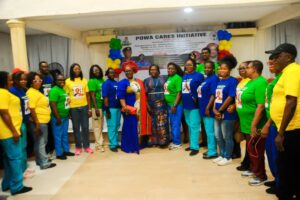
In a country where the demands of policing often leave little room for personal wellbeing, a quiet but impactful revolution is taking shape one focused not on uniforms or operations, but on the health and dignity of those behind the badge.
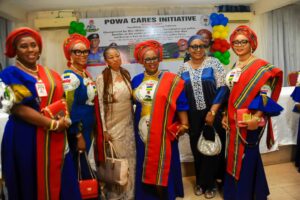
On Tuesday, April 28, in Lagos, Mrs. Mutiat Olufunmilola Disu wife of the Inspector-General of Police and National President of the Police Officers’ Wives Association (POWA) stepped forward with a bold vision. Through the launch of the POWA Cares Initiative, she is championing a comprehensive programme aimed at transforming the lives of police families, particularly women, by placing healthcare, empowerment, and social support at the forefront.
At the heart of the initiative is an ambitious target: to reach at least 1,000 women with essential health services, financial support, and life-changing opportunities. But beyond the numbers lies a deeper mission addressing a long-standing gap in health awareness and access among police families, where preventable illnesses have too often gone undetected until it is too late.
Drawing from her medical background, Mrs. Disu underscored the urgency of early diagnosis and proactive healthcare. She explained that the programme is not just about treatment, but education equipping women with the knowledge to recognize symptoms early, seek timely care, and ultimately save lives.
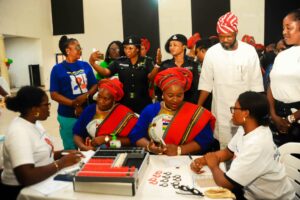
Inside the bustling venue, the impact was immediate and tangible. Women moved from one medical station to another, receiving dental care, eye examinations, blood tests, blood pressure checks, glucose screening, and reproductive health services. For many, it was their first comprehensive health check in years a moment of reassurance and, in some cases, a wake-up call.
Yet, POWA Cares goes beyond clinics and consultations. It embraces a holistic approach to wellbeing. Recognizing the growing shortage of healthcare professionals in Nigeria, partly driven by migration trends, the initiative is investing in the future by offering scholarships to 15 nursing students an effort to inspire a new generation into the profession.
The programme also casts its net wider, reaching young adults with sensitisation campaigns against social vices, reinforcing the idea that strong families are the bedrock of a stable society.
Then came moments of joy and relief that many beneficiaries will not soon forget. In a raffle draw, 200 women received cash grants of N50,000 each support that could ease financial burdens or spark small business ventures. Another 200 beneficiaries were given Cowry cards preloaded with N10,000, providing access to Lagos’ train and Bus Rapid Transit systems an often-overlooked but critical aspect of daily survival in a bustling city.
Adding a personal touch, selected families were rewarded with exclusive dinner experiences five with the Lagos State Governor and another five with the Inspector-General of Police symbolizing a bridge between leadership and the grassroots.
For beneficiaries like Joy Ezirim, Fakoya Olaide, Agboola Agnes, Ubine Ladidi, Kehinde Magbagbeolu, Hakimat Usman, and Temilola Ayeni, the initiative was more than an event; it was a lifeline one that acknowledged their struggles and offered tangible support.
Stakeholders have been quick to recognize the programme’s significance. Lagos State Commissioner of Police, Fatai Tijani, described it as a groundbreaking effort, noting that when police families are healthy and stable, officers are better equipped to serve and protect.
Health professionals also echoed the message. Mrs. Olusola Ositade, Deputy Director of Nursing at the Lagos State Ministry of Health, urged women to embrace early detection, openness, and self-care as essential tools for long-term wellbeing.
As the two-day programme unfolds, its ripple effects are already evident. But for Mrs. Disu, this is only the beginning. With plans to expand POWA Cares across all 36 states, she is calling on state governments to partner with POWA and replicate the initiative nationwide.
If successful, the vision could mark a turning point not just for police families, but for community health across Nigeria proving that sometimes, the most powerful form of security is not force, but care.