

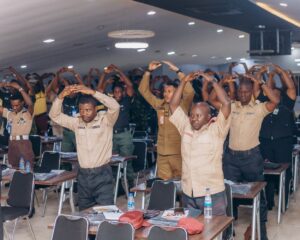
Health experts advocate resilience, nutrition, medical checks for Lagos security personnel
The Lagos State Security Trust Fund (LSSTF) has placed the health, wellness and resilience of security personnel at the centre of its September edition of the Statewide Inter-Agency Training Programme, reinforcing the message that the effectiveness of Lagos’ security architecture depends not only on equipment and technology, but also on the wellbeing of the officers who operate them.
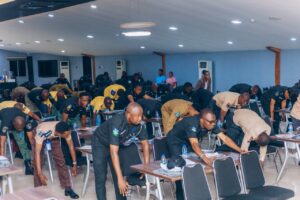
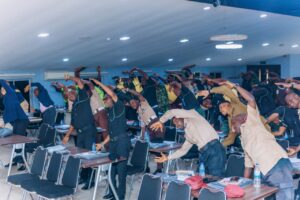
The training, held in Lagos, brought together security operatives and health professionals for a multidisciplinary session focused on physical fitness, mental resilience, preventive healthcare and nutrition as essential components of operational readiness.
The programme reflects the philosophy of the LSSTF Executive Secretary/CEO, Dr. Ayodele Ogunsan, that investment in security must go beyond patrol vehicles, communication gadgets and tactical equipment to include investment in the people responsible for protecting the state.
In his welcome remarks, Ogunsan, who was represented by the LSSTF Executive Assistant, Mrs. Adaobi Nwankwo, reiterated the Fund’s commitment to strengthening the capacity and welfare of security personnel through continuous, practical and multidisciplinary training.
He stressed that security operatives in Lagos must be operationally prepared while also remaining physically, mentally and emotionally equipped to cope with the demands of their duties.
According to him, training, welfare and operational effectiveness are interconnected, adding that bringing professionals from different fields into the programme would enable officers to make better decisions, build resilience and remain effective in challenging situations.
‘Protecting Our Protectors’
Leading the health intervention, Dr. Diya Ololade Oluwadamilola, Executive Director and Deputy Director of Clinical Services at Atlantis Pediatric and Multi-specialist Hospital, described the session as an initiative aimed at “protecting our protectors.”
The board-certified family physician, lifestyle physician and reproductive health specialist noted that security personnel routinely put their lives and the wellbeing of their families at risk in the service of the public.
He said the medical component of the training was designed to help officers improve their quality of life while identifying potential health risks before they become debilitating.
A major focus of his presentation was resilience, which he described not as the absence of stress or adversity, but as the ability to adapt, recover and overcome difficult circumstances.
“Being resilient is not being unaware of the challenges or the stress or the difficulties that we face as individuals, but it is about bouncing back, adapting, and ensuring that you overcome whatever it is that is besieging you,” he explained.
Dr. Diya also introduced the FRESH Protocol—Food, Reduce stressors, Exercise, Sleep, and Health checks and vaccinations—as a practical framework for healthier living.
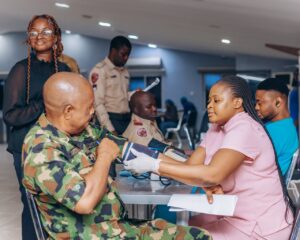
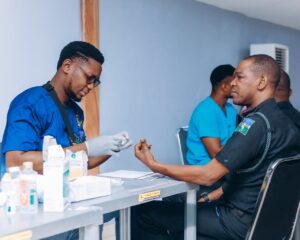
Participants were further taken through practical “Know Your Numbers” checks, including blood pressure, blood sugar, weight and height measurements. The exercise enabled officers to better understand their health indicators, including body mass index, and identify possible areas requiring medical attention.
Nutrition as a Security Tool
The nutrition component was delivered by Miss Titilayo Akindele, clinical nutrition consultant and founder of NutriFull Clinical Services, who spoke on “Fueling the Force.”
Akindele linked good nutrition directly to operational effectiveness, explaining that poor eating habits, dehydration and irregular meal patterns can negatively affect energy levels, concentration and long-term health.
She identified three key pillars of what she termed “warrior nutrition”: eating right, staying hydrated and timing meals properly.
Using familiar Nigerian foods, including beans, yam, fish and leafy vegetables, she demonstrated that healthy eating does not necessarily require expensive or unfamiliar meals.
She, however, cautioned officers against excessive consumption of fried street foods, sugary drinks and instant noodles, describing them as “enemy foods” when consumed too frequently.
Her central message to the officers was simple: “Your body is the most important piece of equipment. You maintain your weapon, your vehicle, your gear. Your body deserves the same discipline.”
She encouraged personnel to plan their meals ahead, prepare food in bulk where possible, remain adequately hydrated and replace sugary drinks with healthier alternatives such as water and nutritious snacks.
Health, Resilience and Public Safety
The September training reinforced a broader understanding of security readiness: that an effective security officer must be mentally alert, physically fit, emotionally resilient and medically conscious.
For Lagos, a megacity where security personnel operate under demanding conditions involving long hours, constant movement, emergencies, public pressure and evolving threats, maintaining the wellbeing of officers is increasingly becoming an essential part of operational preparedness.
The LSSTF initiative therefore underscores a simple but important principle: the people who protect Lagos must themselves be protected, strengthened and equipped to remain fit for duty.
By integrating health screening, resilience education and practical nutrition into its inter-agency training programme, the Fund is expanding the meaning of security investment and demonstrating that a healthier and more resilient security workforce is itself a critical component of public safety.