

Beyond the Badge and Ballot: Lagos Police Mobilise Youths Against Political and Digital Thuggery
Police-Youth Dialogue Brings Security Agencies, Student Leaders, Transport Unions, Media and Youth Organisations Together in Lagos
By The Tochlight Africa News
At a time when Nigeria’s young population is increasingly shaping political conversations and digital spaces, the Lagos State Police Command has taken a significant step towards preventing the exploitation of youths for violence by launching a National Campaign Against Political and Digital Thuggery.
The campaign, which was unveiled as part of activities marking International Youth Day 2026, was accompanied by a robust Police-Youth Dialogue designed to bridge the gap between young people and security institutions.
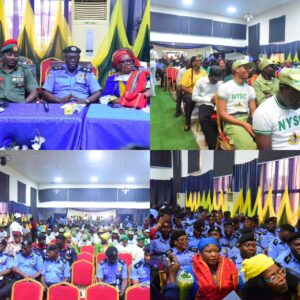
Held at the POWA Hall, Oduduwa, GRA, Ikeja, Lagos State, the programme brought together an impressive coalition of security stakeholders, youth leaders, student representatives, transport unions, community organisations and media practitioners under the theme: “Different Contexts, Common Aspirations.”
The initiative is in line with the directive of the Inspector-General of Police, IGP Olatunji Rilwan Disu, psc(+), NPM, and reflects the growing recognition that securing society requires more than policing alone—it requires trust, communication and active participation from the people, particularly the youth.
A Gathering of Security Stakeholders
The event attracted senior representatives from various security and community-based institutions, underscoring the importance of a united approach to tackling emerging threats.
Security agency and stakeholders present the 9 Brigade, Nigerian Army; Nigerian Air Force; Nigerian Navy, Beecroft; Nigeria Police Force; POCACOV; Police Community Relations Committee (PCRC); NANS; NURTW; RTEAN, among others, were part of the engagement.
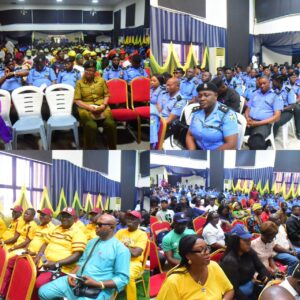

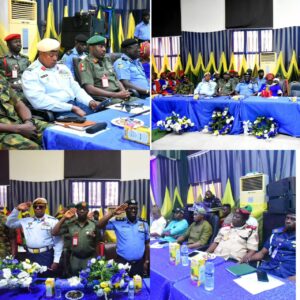
The presence of stakeholders across the security, youth, transport and community sectors demonstrated that political and digital thuggery cannot be addressed by one institution in isolation.
Among the notable stakeholders were Brigadier General Ayokunle Owolabi, Commander, 9 Brigade, and Air Commodore M.A. Imam, alongside representatives of the Nigerian Navy Beecroft and other security formations.
Also represented were youth and community leadership structures, including the PCRC Chairman, Lagos State; POCACOV; National Association of Nigerian Students (NANS); National Union of Road Transport Workers (NURTW); Road Transport Employers Association of Nigeria (RTEAN) and other stakeholders.
From Physical Streets to Digital Streets
The campaign comes against the backdrop of an evolving security environment in which thuggery is no longer confined to the streets.
Political violence can now be amplified through social media, misinformation, intimidation, cyber-enabled criminality and coordinated online attacks.
It was against this background that the Lagos State Police Command urged young Nigerians to recognise the enormous power they possess both offline and online and to deploy that power responsibly.
The Command emphasised that although young people come from different social, economic and cultural backgrounds, they share common aspirations for a peaceful, secure and prosperous society.
Rather than allowing themselves to be used as instruments of political violence, cultism or cybercrime, youths were encouraged to become active partners in building a safer Lagos and Nigeria.
An Open Conversation Between Police and Youths
A major highlight of the programme was the interactive Police-Youth Dialogue, which created an avenue for participants to openly discuss issues affecting young Nigerians and their relationship with law enforcement.
The conversation touched on policing, security, political participation, social media, cultism, political thuggery and other emerging security concerns.
For the Police, the engagement was not simply about warning young people against crime. It was also an opportunity to listen, understand youth concerns and strengthen mutual confidence.
The message was clear: young people must not be treated merely as beneficiaries of security they must be recognised as critical partners in securing society.
CP Tijani: Security Is Everybody’s Business
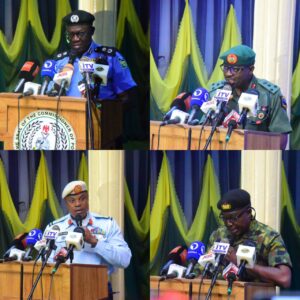
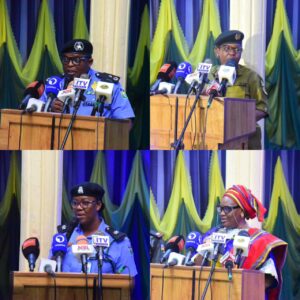
The Commissioner of Police, Lagos State Command, CP Tijani Fatai, psc, mnips, commended the participating security agencies, youth organisations, community leaders, transport unions and media for supporting the initiative.
CP Tijani called on stakeholders to take ownership of the campaign by continuously sensitising their members against political thuggery, cultism, cyber-enabled criminality and violence.
He particularly challenged youth leaders, student organisations, transport unions, community groups and media practitioners to play active roles in changing the narrative around youth participation in politics and society.
The Commissioner reiterated that security is a shared responsibility, urging residents—especially young people to provide credible and timely information to the Police and other security agencies to assist crime prevention and maintain peace across Lagos.
Honouring Youth Champions
The campaign also provided an opportunity to recognise individuals and organisations that have contributed significantly to Police-Youth relations and community security.
Engr. Adigun Ibrahim Olalekan, Chairman, National Youth Council of Nigeria (NYCN), Lagos State, was honoured with the prestigious award of Police-Youth Ambassador in recognition of his contributions to youth engagement and community security.
The president of NAN, CRAN, NAOSNP and the Youth Wing of PCRC were similarly recognised for their contributions to security, community policing, youth engagement and the promotion of a safer Lagos.
The recognitions reinforced the message that security partnerships thrive when community and youth leaders are given a seat at the table.
9 Brigade Commander Backs Police Campaign
In his goodwill message, Brigadier General Ayokunle Owolabi, Commander, 9 Brigade, commended the Nigeria Police Force for organising the International Youth Day programme and the Police-Youth Dialogue.
He described the initiative as timely and commendable, particularly at a period when there is an increasing need to build trust and constructive engagement between young Nigerians and security institutions.
Owolabi noted that the youth constitute a powerful force in shaping Nigeria’s present and future, stressing that their energy, creativity and resilience remain vital to the country’s peace, security and development.
He also applauded the launch of the campaign against political and digital thuggery, warning that the misuse of physical and digital platforms could create serious security challenges.
A Call for Responsible Digital Citizenship
For Brigadier General Owolabi, the solution lies not in restricting young people’s voices but in encouraging them to use their influence responsibly.
He urged youths to reject violence, hate, intimidation, misinformation and destructive online engagement, while using their technological skills to promote peace, national cohesion and development.
He said the International Youth Day theme aptly captures Nigeria’s reality: people may operate within different contexts, but they share common aspirations.
Regardless of differences in background, opinion or experience, Nigerians ultimately desire a country that is peaceful, secure, stable and prosperous.
Security Beyond the Security Agencies
One of the strongest messages from the engagement was the need for a whole-of-society approach to security.
National security, the Brigade Commander stressed, cannot be left exclusively to the Police, military and other security agencies.
Young people, civil society groups, transport unions, traditional and community leaders, the media and other stakeholders all have roles to play.
Meaningful engagement, mutual respect and open communication between security agencies and youths, he noted, would help build the confidence necessary for effective collaboration.
Quoting Nelson Mandela, Owolabi reminded participants of the importance of investing in the next generation, noting that “The youth of today are the leaders of tomorrow.”
The message resonated throughout the gathering: if Nigeria wants responsible leaders tomorrow, it must begin by equipping, guiding and engaging its youths today.
The Road Ahead
The Lagos Police campaign represents more than a one-day International Youth Day activity. It is a call for sustained engagement between security institutions and the generation that will shape Nigeria’s political, economic and social future.
As political activities intensify and digital platforms continue to influence public opinion, the challenge will be to ensure that Nigerian youths become agents of peace rather than instruments of violence.
The Police-Youth Dialogue therefore ended with a broader responsibility placed on every stakeholder: to keep the conversation going, strengthen trust, reject political and digital thuggery, and work collectively towards a safer Lagos.
The gathering at POWA Hall may have been one event, but its message was much bigger:
Nigeria’s security future will not be built by security agencies alone. It will be built with the active participation, creativity and responsible choices of its young people.