

Why character remains the ultimate risk-control tool in banking and business
In the corridors where money and power meet, integrity is far more than a virtue to be admired. It is perhaps the most powerful risk-control mechanism an institution can possess—and the one asset capable of outliving its owner.
Much of my professional life has been devoted to thinking about what can go wrong, how it can be prevented and how decisions can be made more safely. That is the quiet responsibility of a risk officer: to sit where critical decisions are made, ask the uncomfortable questions, anticipate failure before it happens and put a price on dangers others may prefer not to name.
Over the years, that responsibility has taught me a humbling lesson: the greatest risks facing financial institutions are not always found in spreadsheets, market data or credit models. They often reside in character—in the integrity, or absence of it, of those entrusted with power.
It is a lesson as old as commerce itself.
When Character Becomes Collateral
There is an ancient story in the Jewish Scriptures about a man who died heavily indebted. In life, he had been respected in his profession and trusted by his principal. But after his death, his creditor sought to take his two sons as bonded servants.
His widow had nothing left to offer except the reputation her husband had built.
She went to the prophet Elisha and reminded him that her late husband had been a man of integrity. Elisha instructed her to gather as many empty vessels as she could and pour into them the little oil she had. Miraculously, the oil continued flowing until every vessel was filled.
She sold the oil, settled the debt and secured a future for herself and her sons.
The story is remembered for its miracle, but there is another lesson that deserves attention especially in finance.
The widow’s greatest collateral was not property, cash or securities. It was her husband’s good name.
His integrity became an asset that could not be seized.
Strip away the miracle, and a hard commercial truth remains: character has economic value. It may not appear on a conventional balance sheet, but it can determine whether an institution survives a crisis, whether a customer continues to trust it and whether a legacy endures.
Where Risk Really Lives
The uncomfortable reality is that some of the most damaging integrity failures occur not at the bottom of an organisation, but at the top.
The Association of Certified Fraud Examiners (ACFE), in its 2024 global study of 1,921 fraud cases across 138 countries, found a clear relationship between the seniority of perpetrators and the scale of losses. The more senior the perpetrator, the greater the financial damage.
The report also highlighted the prevalence of weak internal controls and the overriding of existing controls as major contributors to fraud.
That should concern every institution.
The greatest danger often exists in the very corridors where authority is concentrated—where individuals with the power to enforce the rules may also possess the power to circumvent them.
The man in the ancient story had influence and trust, but he used them honestly.
The modern cautionary tale is the executive who uses that same influence to suspend the very controls designed to protect the institution.
The Price of a Damaged Reputation
Warren Buffett famously observed that reputation can take decades to build but only moments to destroy.
The banking industry has learned just how expensive that truth can be.
The Boston Consulting Group estimated that between 2008 and 2016, banks globally paid more than $320 billion in fines related to misconduct, including benchmark manipulation, money laundering and the sale of unsuitable products.
These were not necessarily failures of intelligence or technical competence. Many of the institutions involved employed exceptionally talented professionals.
They were, fundamentally, failures of integrity—and the financial consequences were enormous.
Nigeria is not immune.
In 2024, Nigerian banks reportedly lost about ₦52 billion to fraud, according to data from the Nigeria Inter-Bank Settlement System (NIBSS).
More concerning is the role of insiders.
While bank employees represent a relatively small proportion of those implicated in fraud, their access and authority can make their actions disproportionately damaging.
In the first quarter of 2025 alone, staff-linked fraud reportedly cost Nigerian banks about ₦3.3 billion, representing a significant increase from the preceding quarter, even as the number of cases declined.
The message is clear:
Fewer people can cause greater damage when those people possess authorised access.
For banks, trust is not merely part of the product. It is the foundation of the product.
When trust is compromised, the institution does not merely lose money. It loses something far more difficult to quantify—the confidence of customers, investors, regulators, employees and the wider public.
Integrity Is the Slowest Asset to Build
But there is a hopeful side to this story.
Trust can be rebuilt.
The 2026 Edelman Trust Barometer placed trust in financial services at 63 percent globally, representing a ten-point improvement over five years and one of the strongest gains recorded among major sectors.
That recovery demonstrates an important principle: institutions can regain confidence when they consistently demonstrate that they are prepared to do the right thing.
Integrity is the slowest asset to build and one of the fastest to lose.
That is precisely why it is so valuable.
Making Integrity Institutional
This is where the risk profession becomes critical.
Individual integrity matters, but individuals eventually leave. Leaders retire. Executives change. Employees move on.
Institutions therefore need systems that make integrity sustainable.
The goal of risk management should be to create an environment in which doing the right thing is not an act of extraordinary courage but the natural path of least resistance.
That requires a strong culture, effective controls and leadership that consistently demonstrates the standards expected of everyone else.
The Financial Stability Board has repeatedly emphasised the importance of tone from the top in establishing a sound risk culture.
The three-lines model exists for precisely this reason: no individual, regardless of rank, should be beyond challenge.
And perhaps the most powerful early-warning mechanism an organisation possesses is a workforce that feels safe enough to speak up.
According to ACFE data, tips account for roughly 43 percent of fraud detections, making them the most common way fraud is uncovered.
The lesson is straightforward:
Controls without character become paperwork. Character without controls becomes luck.
Effective risk management requires both.
A Message to Three Generations
The ancient story speaks powerfully to three groups.
To the professional
If you occupy a position where money, influence and power intersect, understand that your integrity is your real balance sheet.
Your title is temporary. Your position will eventually belong to someone else.
But your reputation is yours.
Every decision—particularly those made when nobody is watching—either adds to it or draws it down.
The question worth asking every morning is:
What am I building that will outlive my position?
To women in the industry
The story also carries a powerful message for women who continue to navigate professional environments where they may sometimes have to prove themselves twice.
Notice who carries the story forward: a widow whom society could easily have regarded as powerless.
She had no wealth and no official authority. What she possessed was clarity, dignity and an honest name.
And that was enough to open a door.
Integrity gives a person a standing that no title can manufacture and no prejudice can permanently take away.
To young professionals
You will eventually encounter people who tell you that integrity is a luxury—that everyone cuts corners, that the system rewards the clever rather than the honest, and that you must compromise if you want to get ahead.
Do not believe them.
Character is built through the choices you make when compromise appears easier.
The widow in the story was instructed to gather empty vessels. The amount she could ultimately hold depended on how many vessels she was willing to gather.
Think of character in the same way.
Build more capacity for integrity than you think you will ever need.
Because behind every number on a financial statement is a person. Behind every account is often a family. Behind every financial decision may be someone’s education, livelihood, home or future.
We are not merely safeguarding balances.
We are safeguarding lives.
The Asset That Outlives Us
In risk management, we spend our days calculating what can be lost.
But the ancient story reminds us to also recognise what cannot easily be taken away.
The man left behind no vault, portfolio or fortune. What he left was a name strong enough to influence someone who had once trusted him.
That is the enduring power of integrity.
We may not ultimately be remembered for the deals we closed, the profits we generated or the positions we occupied.
We will be remembered by whether our word could be trusted when keeping it came at a cost.
Integrity is the asset no creditor can seize, no market can erase and no position can diminish.
Building institutions that preserve and reward that integrity may therefore be the most important form of risk management any of us will ever undertake.
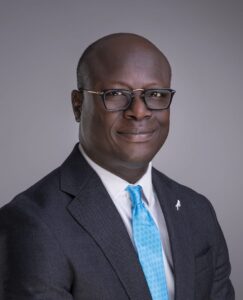
Eyitayo Quadri is the Chief Risk Officer at Union Bank of Nigeria, where he oversees credit, operational and market risk, as well as internal control across the Bank, ensuring robust controls and alignment with regulatory standards. Before joining Union Bank, he worked in various functions in risk management, business strategy and sales at Keystone Bank, Ecobank, Citibank (NIB) and UBA. He holds a BSc in Mathematics from Lagos State University and an MBA in International Finance & Strategy from Bayes Business School (St George’s City, University of London). He also completed the Emerging Leader Development Programme at Columbia Business School. He is a Chartered Risk Manager of the Chartered Risk Management Institute of Nigeria and a Chartered Banker of the Chartered Institute of Bankers of Nigeria, and is recognised as a thought leader in risk management.