


As Nigeria moves towards another electoral cycle, the Lagos State Police Command has intensified its campaign against political violence and the emerging threat of digital thuggery, urging youths to reject manipulation, misinformation, cyber-enabled criminality and violence.
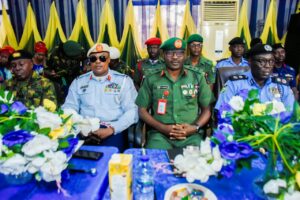
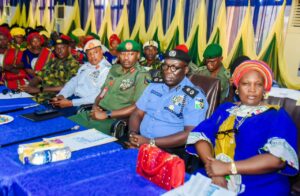
The campaign, led by the Commissioner of Police, Lagos State Command, CP Fatai Tijani, was launched on Thursday as part of activities marking International Youth Day 2026, during a Police-Youth Dialogue held at the Police Officers’ Wives Association (POWA) Secretariat, Oduduwa Street, Lagos.
The dialogue, themed “Different Contexts, Common Aspirations,” brought together youths, security agencies, student organisations, transport unions, community groups and media practitioners to discuss ways of strengthening trust between young people and security institutions and preventing youth involvement in crime and electoral violence.
The initiative was organised in line with the vision of the Inspector-General of Police, IGP Olatunji Rilwan Disu, to deepen police-community partnerships and promote proactive engagement with young Nigerians.
Speaking at the well-attended event, CP Tijani stressed that despite differences in social, economic and cultural circumstances, Nigerian youths share common aspirations for security, dignity, opportunity and a better future.
He warned youths against allowing politicians to exploit them as instruments of electoral violence.
“None of these politicians will use any of their children for electioneering, thuggery, violence or what have you. It is these different children of nobody. But for me, I want to believe that there is nobody that is nobody. All of us are very important at this point,” Tijani said.
The Commissioner urged young Nigerians to look beyond immediate financial inducements and consider the long-term consequences of their actions.
“Tomorrow is there for us. We should not think of today. We should always think of tomorrow. That tomorrow is more important than what we are today,” he stated.
Tijani specifically cautioned youths against being recruited to snatch ballot materials, intimidate voters, attack political opponents or disrupt elections, emphasising that political participation must never become a platform for violence.
‘Your Phone Is Powerful’
The CP also highlighted the growing digital dimension of political thuggery, noting that threats, harassment, misinformation, intimidation and manipulation can now be initiated and amplified through social media.
“Your phone is powerful. Your social media account is powerful. Your voice is powerful. Please use that power to build, not destroy,” he urged.
He called on young people to verify information before sharing it and exercise restraint when responding to provocative online content.
According to him, the Police would continue to provide a secure environment for lawful political activities while professionally confronting criminality, violence and other threats to public safety.
NURTW, RTEAN Charged
Tijani also challenged transport unions, particularly the National Union of Road Transport Workers (NURTW) and Road Transport Employers Association of Nigeria (RTEAN), to help prevent the recruitment of their members into political violence.
“Please do not allow your members to be recruited as political thugs. Do not allow your garages or motor parks to become centres for political violence,” he appealed.
He further called on parents, educators, religious leaders, traditional rulers and community leaders to engage young people early, stressing that effective crime prevention begins long before criminal behaviour develops.
Army Backs Whole-of-Society Approach
In his goodwill message, the Commander, 9 Brigade, Nigerian Army, Brigadier General Ayokunle Owolabi, described the initiative as timely, particularly in an era where both physical and digital spaces can be exploited to create security challenges.
Owolabi emphasised that national security cannot be achieved by security agencies alone, stressing the need for a whole-of-society approach in which young Nigerians become active partners in building national resilience.
‘Policing Is Everybody’s Business’
The Lagos State Coordinator of the Police Campaign Against Cultism and Other Vices (POCACOV), SP Olivia Amarachi Ugochukwu, urged youths to become agents of positive change within their communities.
“Policing is everybody’s business. If you see something, say something,” she said, while urging media practitioners to “dish out only verified information.”
Ugochukwu disclosed that POCACOV would continue its sensitisation programmes in schools and communities against drug abuse, cultism and other social vices.
“The change starts with us,” she added.
The dialogue featured representatives of the 9 Brigade Nigerian Army, 651 Base Service Group of the Nigerian Air Force, Nigerian Navy Beecroft, NDLEA, FRSC and NSCDC, alongside POWA, NYSC, POCACOV, PCRC, NYCN, NANS, NURTW, RTEAN, CRAN, NAOSNP and youths from Police Barracks across Lagos.
Participants deliberated on policing, political participation, social media, cultism, thuggery, emerging security threats and ways of strengthening police-youth relations.
Police-Youth Advocates Honoured
The event also featured recognition of individuals who have contributed to police-youth relations and community security.
Among those honoured were Engr. Adigun Ibrahim Olalekan, Chairman of the National Youth Council of Nigeria (NYCN), Lagos State; Mayor Oki O. Samson, President of the National Association of Online Security News Publishers (NAOSNP), who was recognised as a Police-Youth Advocate; as well as the heads of NANS and CRAN.
The recognitions underscored the growing importance of collaboration between security institutions, youth organisations, civil society and the media in addressing emerging security challenges.
Beyond Campaigns: Building a Culture of Peace
The dialogue ultimately reinforced a message that extends beyond the campaign itself: Nigeria’s security future depends not only on responding to crime and violence but also on preventing the exploitation of young people in the first place.
As political competition intensifies and social media continues to shape public opinion, stakeholders stressed the need for young Nigerians to reject inducements for violence, resist online provocation, verify information and make responsible choices.
For Lagos and Nigeria, the task is therefore not merely to keep youths away from crime, but to give them a meaningful stake in peace and national development.
Their circumstances may differ, but their aspirations remain largely the same — security, dignity, opportunity and a better future. Protecting those shared aspirations requires a collective commitment from the Police, government, parents, communities, media organisations and, most importantly, the youths themselves.